How to Become a Home Health Aide in Michigan: Training, Pay and Jobs
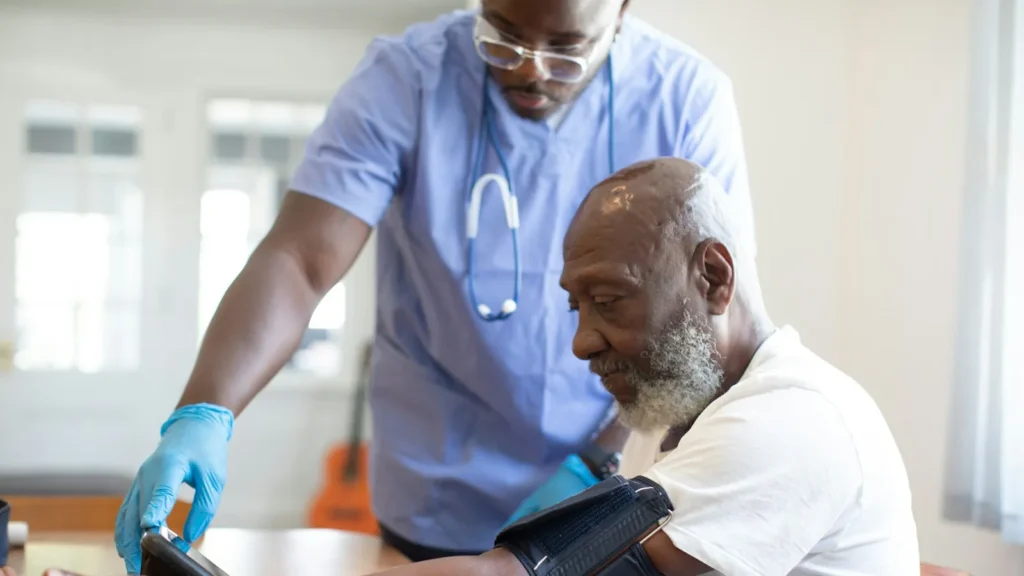
To become a home health aide in Michigan you must be at least 18, pass a background check, and complete training and a competency evaluation if you will work for a Medicare-certified agency. Michigan issues no home health aide license. To care for a relative instead, the Home Help program pays you through Medicaid with no formal training.
On this page
- What does a home health aide do in Michigan?
- Do you need certification to be a home health aide in Michigan?
- How to become a home health aide in Michigan, step by step
- How much do home health aides make in Michigan?
- Where are the home health aide jobs in Michigan?
- The Home Help route: get paid to care for a relative
- Frequently asked questions
Key takeaways
- Michigan has no state license for home health aides; federal rules apply at Medicare-certified agencies.
- Federal-standard training is at least 75 hours with hands-on practice and a competency evaluation.
- A CNA credential from the Michigan Nurse Aide Registry is a common alternative that many employers accept.
- Non-medical home care agencies, including Supportive Solutions Homecare, train new caregivers in-house.
- Caring for a family member on Medicaid pays through Home Help with no certification required.
What does a home health aide do in Michigan?
A home health aide (HHA) helps people who are elderly, disabled or recovering from illness with personal care at home. Daily work includes bathing, dressing, toileting, transfers, meal preparation and light housekeeping. At a Medicare-certified home health agency, aides also take vital signs and follow a nurse’s care plan.
The title gets used loosely in Michigan. Job postings for “home health aide,” “personal care aide,” “caregiver” and “direct care worker” often describe the same tasks. What differs is who employs you, what training they require and how you are paid.
| Role | Training required | Credential | Typical employer |
|---|---|---|---|
| Home health aide (Medicare agency) | Federal minimum 75 hours plus competency evaluation | Agency-issued certificate of completion | Medicare-certified home health agencies, hospital systems |
| Certified nursing assistant (CNA) | State-approved program of at least 75 hours plus state exam | Michigan Nurse Aide Registry listing | Nursing facilities, hospitals, home care agencies |
| Non-medical caregiver or personal care aide | Agency orientation and on-the-job training | None required by the state | Home care agencies such as Supportive Solutions Homecare |
| Home Help individual provider | None required | MDHHS enrollment through CHAMPS | Paid directly by MDHHS to care for a Medicaid recipient |
Do you need certification to be a home health aide in Michigan?
It depends on where you want to work. The Michigan Department of Health and Human Services (MDHHS) does not license home health aides, so there is no state exam or registry for the HHA title itself.
Medicare-certified home health agencies must follow federal rules. Those require an aide to complete a training program of at least 75 hours, including at least 16 hours of supervised practical training, and to pass a competency evaluation before working unsupervised. Aides at those agencies also complete 12 hours of in-service training each year.
Non-medical agencies are not bound by those rules. They provide their own orientation covering personal care, safety, infection control and, increasingly, dementia care. And Home Help individual providers need no certification at all; MDHHS requires a background screening and CHAMPS enrollment instead.
How to become a home health aide in Michigan, step by step
- Pick your path. Decide whether you want a Medicare-agency HHA role, a CNA credential, a non-medical caregiver job, or to be paid for caring for a relative through Home Help. The training you need follows from that choice.
- Meet the basic requirements. You must be at least 18, have a Social Security number, pass a criminal background check and, at most agencies, a TB screening. A driver’s license and reliable transportation are expected for in-home work.
- Complete training. Community colleges, Michigan Works! centers, private career schools and larger home health agencies offer HHA and CNA programs. Some agencies pay for training in exchange for a work commitment.
- Pass the competency evaluation. For HHA programs this is a skills check and written test administered by the training provider. For CNAs it is the state exam that places you on the Michigan Nurse Aide Registry.
- Get CPR and first aid certified. Not required by law, but most employers ask for it and it strengthens your application.
- Apply for jobs. Home health agencies, hospital systems, hospices and home care agencies across Michigan hire continuously. Our careers page lists openings in Detroit, Dearborn, Warren, Sterling Heights, Ann Arbor, Flint, Lansing and Grand Rapids.
- Keep your skills current. Complete annual in-service hours if your agency requires them and keep CPR certification active.
Before you enroll in a program, read what disqualifies you from being a caregiver in Michigan so a background issue does not surprise you after you have paid tuition.
How much do home health aides make in Michigan?
Pay depends on employer type, credentials and region. As of 2026, Michigan home health and personal care aides elsewhere typically earn roughly $15 to $17 per hour (Supportive Solutions caregivers start at a minimum of $18 per hour), with Medicare-certified agencies and hospital systems often at the higher end and CNAs earning more than uncredentialed aides.
Home Help caregivers are paid for authorized hours. Through Supportive Solutions, caregivers earn a minimum of $18 per hour. That pay does not depend on certification, which is why many Michigan caregivers start with a relative under Home Help and add agency shifts later. Our post on how much family caregivers get paid in Michigan explains how hours are authorized.
Where are the home health aide jobs in Michigan?
Demand is strongest where the population is oldest and where hospital systems discharge patients home: Metro Detroit, Grand Rapids, Ann Arbor, Lansing and Flint. Employers fall into four groups.
- Medicare-certified home health agencies attached to hospital systems, which require the federal HHA training.
- Non-medical home care agencies that serve Medicaid Home Help clients and private-pay families. Supportive Solutions Homecare is one; see our home health aide services page for what our aides do.
- Hospices and nursing facilities, which usually prefer CNAs.
- Families themselves, through Home Help, where the aide is a relative or friend enrolled as an individual provider.
The Home Help route: get paid to care for a relative
If the reason you are researching this is that you are already caring for a parent or grandparent, you may not need an HHA certificate at all. Michigan’s Home Help program pays a family member or friend to provide personal care to a Medicaid recipient who needs help with daily tasks.
You enroll with MDHHS as an individual provider through CHAMPS, pass the background screening, and log visits with EVV. Our CHAMPS enrollment guide covers the process, and become a paid caregiver is where to start. If you are not sure your loved one has Medicaid, use our Medicaid eligibility check first.
About these figures: Pay rates, income and asset limits, costs, office details and timelines on this page are averages or estimates based on publicly available program information. They change over time and depend on your situation, and they are not a guarantee of pay, eligibility or approval. Call us at (313) 977-6888 for current rates and to check your specific case.
Frequently asked questions
Does Michigan require a license to be a home health aide?
No. Michigan does not issue a state license or certificate for home health aides. If you work for a Medicare-certified home health agency, federal rules require you to complete an approved training program and competency evaluation. Non-medical home care agencies and the Home Help program set their own, lighter requirements.
How long does home health aide training take in Michigan?
Programs that meet the federal standard for Medicare-certified agencies require at least 75 hours of training, including supervised hands-on practice, and most students finish in a few weeks. Agency orientation for non-medical caregiver roles is shorter. Home Help individual providers need no formal training at all.
What is the difference between a home health aide and a CNA in Michigan?
A CNA completes a state-approved nurse aide program, passes the Michigan competency exam and is listed on the Michigan Nurse Aide Registry. A home health aide follows federal training rules for home settings but is not on a state registry. Many Michigan employers accept either credential for home care work.
Can I get paid to be a home health aide for a family member?
Yes, through Michigan’s Home Help program, but the role is called an individual provider rather than a home health aide. If your relative has Medicaid and needs help with daily tasks, you enroll with MDHHS through CHAMPS and are paid for authorized hours. No aide certification is required.
What disqualifies you from home health aide jobs in Michigan?
Certain criminal convictions found in a background check, a listing on the Medicaid excluded provider list, or a substantiated finding of abuse or neglect will disqualify you from most aide roles and from Home Help. Being under 18 or unable to pass a TB screening can also block employment at many agencies.
Start your caregiving career in Michigan
Join our team as a caregiver with paid training, or get paid through Home Help for the care you already give a relative. We will guide you through screening and enrollment.
Check your eligibility or call (313) 977-6888.