What Happens at a Michigan Home Help Assessment Visit
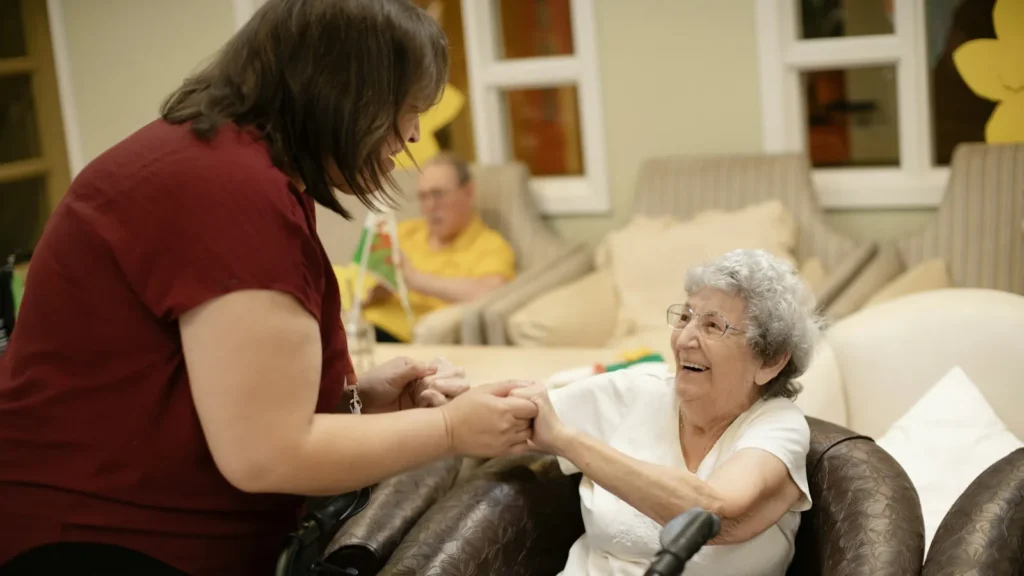
A Michigan Home Help assessment is a home care assessment done in your loved one’s home by an Adult Services Worker from the county MDHHS office. The worker scores how much help is needed with daily tasks such as bathing, dressing, eating and housework, then uses those scores to set the paid caregiver hours Home Help approves.
On this page
Key takeaways
- The visit is conducted by an MDHHS Adult Services Worker, not a nurse or doctor, and usually takes one to two hours.
- Each activity of daily living is scored on a functional scale, and hours are approved only for tasks that need hands-on help.
- A doctor’s Medical Needs form must be on file before hours can be approved.
- Describe a typical bad day, not a good one, and have the future caregiver in the room.
- After the visit you receive a written notice of approved hours, and your caregiver must be enrolled in CHAMPS before pay starts.
Who conducts the Home Help home care assessment?
Home Help is run by the Michigan Department of Health and Human Services. When you ask for Home Help, the request goes to the Adult Services unit at your county MDHHS office. An Adult Services Worker is assigned and calls to schedule a visit at the home where your loved one lives.
The worker is a social services professional, not a medical provider. Their job is to measure functional need, confirm Medicaid coverage, and write a service plan. If your loved one does not yet have Medicaid, start with our Medicaid eligibility check before the visit is scheduled.
What the worker brings and asks for
- A comprehensive assessment form covering daily activities, health, living situation and safety.
- Your loved one’s Medicaid ID and a review of any other services already in place.
- The Medical Needs form, MSA-1904, completed and signed by a physician, physician assistant or nurse practitioner. If it is not done yet, the worker will explain how to get it.
What is measured during the visit?
The assessment is organized around activities of daily living, called ADLs, and instrumental activities of daily living, called IADLs. Home Help pays for help with these specific tasks, so this is the heart of the visit.
Activities of daily living
- Eating
- Toileting
- Bathing
- Grooming
- Dressing
- Transferring, such as moving from bed to chair
- Mobility, such as walking or using a wheelchair inside the home
Instrumental activities of daily living
- Taking medication
- Meal preparation
- Shopping for food and household needs
- Laundry
- Light housework
For each task the worker assigns a functional score. As a general guide, a score of 1 means fully independent, 2 means the person needs reminding or supervision, and 3 or higher means hands-on help is needed. Hours are approved only for tasks scored 3 or higher. The worker also asks about diagnoses, hospital stays, falls, memory, and who currently helps.
The rules for who qualifies are explained in our guide to who qualifies for Home Help in Michigan. In short, your loved one needs active Medicaid and hands-on help with at least one ADL.
How are Home Help hours decided?
Approved hours come from a formula, not a guess. For each task that qualifies, the worker records how many minutes it takes and how many times per week it is needed. Those minutes are added up and converted into a monthly hour total. A person who needs a full bath every day and help dressing twice a day gets more time than someone who needs weekly shopping only.
MDHHS uses standard time ranges for each task, so the worker cannot simply write down whatever a family asks for. What you can influence is accuracy. If bathing takes 40 minutes because your mother needs to rest partway through, say so.
The result is a monthly authorization. Our guide to how much family caregivers get paid in Michigan shows how those hours turn into a paycheck.
How should you prepare for the assessment visit?
Families who prepare tend to get authorizations that match real needs. Here is what we tell every family in Detroit, Dearborn, Warren, Sterling Heights, Ann Arbor, Flint, Lansing and Grand Rapids.
- Get the Medical Needs form started early. Ask the doctor’s office to complete it before the visit so nothing is held up.
- Write a task list. For every ADL and IADL, note what help is needed, how long it takes and how often. Bring the list to the visit.
- Describe a hard day, not a good one. Needs vary. The worker must plan for the days when help is truly required, so do not let your loved one insist they are fine.
- Gather documents. Medicaid card, medication list, diagnoses, recent hospital or rehab discharge papers, and the names of any doctors.
- Have the caregiver present. The person who will be paid should attend, answer questions, and bring a photo ID and Social Security number for enrollment.
- Be honest about what already happens. If a family member already does the care unpaid, say so. Home Help exists to pay for that care.
What happens after the home care assessment?
The worker returns to the office and writes a service plan. You receive a written notice that either approves Home Help with a set number of monthly hours or denies it with a reason. Many families hear back within a few weeks of the visit, though timing varies by county and by how quickly the Medical Needs form arrives.
If Home Help is approved
- Your chosen caregiver must be enrolled as an individual provider in CHAMPS. Our CHAMPS enrollment guide walks through it step by step.
- The caregiver records visits through electronic visit verification.
- Pay begins once enrollment is complete and hours are logged, and MDHHS can back-date the start to the approval date in some cases.
- The worker reassesses at least once a year, or sooner if your loved one’s condition changes.
If the hours feel too low or Home Help is denied
You can ask the worker to review specific tasks, provide more medical documentation, or request a fair hearing. Deadlines are short, so act quickly. Read what to do if Home Help is denied for the steps.
How Supportive Solutions Homecare helps with the assessment
We help families request the visit, complete the task list, get the Medical Needs form signed, and enroll the caregiver so nothing delays the first paycheck. If your loved one needs more than Home Help can cover, we also help with the MI Choice Waiver. Learn more about Medicaid home care through Home Help or how to become a paid caregiver for someone you already care for.
About these figures: Pay rates, income and asset limits, costs, office details and timelines on this page are averages or estimates based on publicly available program information. They change over time and depend on your situation, and they are not a guarantee of pay, eligibility or approval. Call us at (313) 977-6888 for current rates and to check your specific case.
Frequently asked questions
What happens during the Home Help assessment visit?
An Adult Services Worker from your county MDHHS office visits the home, reviews Medicaid coverage, and asks detailed questions about how much help your loved one needs with bathing, dressing, eating, toileting, mobility, medication, meals, shopping, laundry and housework. Each task gets a functional score, and the worker uses those scores and standard time guidelines to set monthly hours.
What are ADLs and IADLs, and how many do you need help with to qualify?
ADLs are basic self-care tasks: eating, toileting, bathing, grooming, dressing, transferring and mobility. IADLs are household tasks: medication, meal preparation, shopping, laundry and housework. To qualify for Home Help, your loved one needs hands-on help with at least one ADL. Help with IADLs alone is usually not enough, but IADL hours can be added once an ADL need exists.
How many hours per month will Home Help pay for?
There is no fixed number. Hours depend on how many tasks score as needing hands-on help, how long each takes, and how often it is needed each week. Someone who needs help with most ADLs daily gets far more time than someone who needs help with one task. Hours above the standard range require extra documentation.
How long does Home Help approval take?
Timing depends on the county office, how quickly the Medical Needs form is returned, and whether Medicaid is already active. Families often receive a decision within a few weeks after the visit, and caregiver pay starts after CHAMPS enrollment is complete. Getting the medical form and enrollment paperwork done early is the best way to shorten the wait.
Should the family caregiver be at the assessment?
Yes. The person who will provide the care knows the daily routine best and can answer questions the care recipient may forget or downplay. The worker will also want the caregiver’s name and details for the service plan, and having them present makes it easier to explain how CHAMPS enrollment and electronic visit verification will work.
Ready to request a Home Help assessment?
Supportive Solutions Homecare helps Michigan families prepare for the visit, get the paperwork right, and start paid caregiver hours faster. We serve families in English, Arabic and Spanish.
Check your eligibility or call (313) 977-6888.